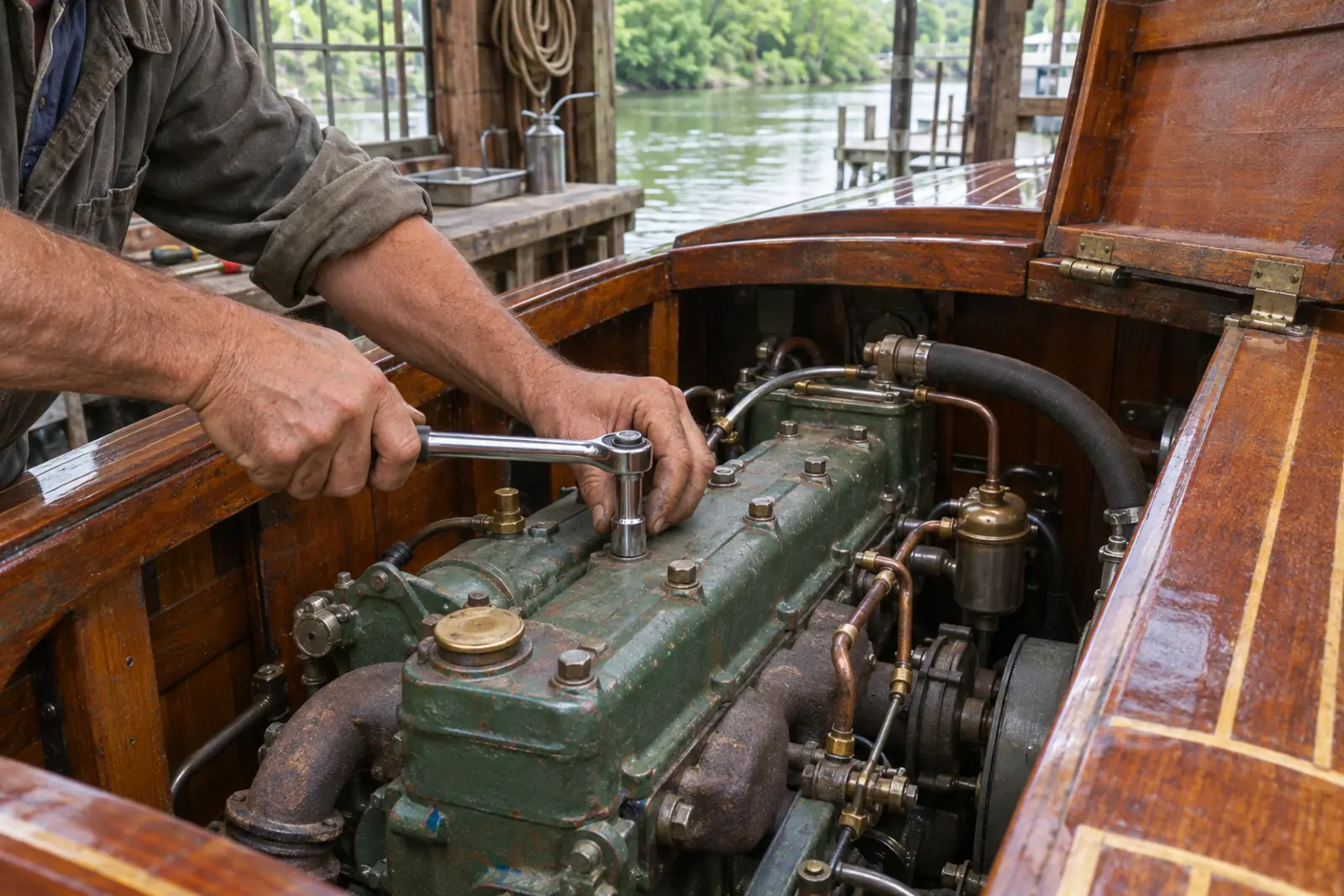
Classic boat engine repair starts with diagnosis, not parts: a technician works from the simplest causes (fuel, spark, battery) toward the hardest (compression, cooling, internal wear), and many problems are resolved with service and adjustment before a rebuild is considered. This guide covers how problems are found, what routine service prevents, and what to ask before anyone works on an old engine.
How diagnosis usually starts
Most symptoms fall into a few groups: hard starting, rough running or low power, overheating, noises, and leaks. Ask for the findings in plain language and in writing before approving anything beyond a basic service. A sound diagnosis follows a fixed order, because each step rules out the cheaper causes before the expensive ones.
- Fuel: is clean, fresh fuel reaching the engine? Stale or ethanol-affected fuel, a clogged filter or a failing fuel pump is a frequent cause of hard starting on older engines.
- Spark and electrical supply: condition of the battery, cables and grounds, then points, condenser, coil, cap, rotor, plugs and wires.
- Compression: a compression test shows whether the cylinders can still seal. A cylinder that reads well below the others points to valves, rings or a head gasket, and that is the moment a repair estimate can turn into a rebuild discussion.
- Cooling: intake, impeller, thermostat, manifolds and passages, checked with the engine running and under load.
- Mechanical wear: bearings, timing components, mounts, shaft alignment and the drive line.
Symptoms and where to read more
- Hard starting or stalling: stale or ethanol-affected fuel, a dirty carburetor, weak ignition parts or a tired battery. See the guides to ethanol fuel, carburetors, ignition and fuel tank inspection and replacement.
- Overheating: a blocked intake, a worn impeller or a clogged cooling passage. See overheating and cooling system care.
- Noise, vibration or loss of drive: running gear, shaft alignment, engine mounts or the transmission. See running gear and transmissions.
- Dead electrics, dim lights or a starter that only clicks: corroded connections or aging wiring. See the electrical rewiring guide.
- Sticky shifting or stiff steering: worn or dry control cables. See steering and control cable care.
Routine service for old marine engines
Regular oil and filter changes, a check of belts and hoses, a look at the fuel system, and attention to the cooling water circuit prevent most breakdowns. Details of the oil side are in the oil change and fluid service guide. In fresh water the sacrificial metals matter too, so check the zinc anodes at each service. The seasonal routines are covered in the winterizing guide and the spring commissioning guide.
Rebuilds and parts
A rebuild means disassembly, measuring wear, machining where needed and reassembly with new gaskets, seals and bearings. Whether to rebuild, repair or replace is a separate decision, covered in rebuild or replace?. Parts for old engines can be scarce, so see finding parts and ask early about lead times.
Choosing someone to work on a classic engine
Experience with your engine's make and era is worth more than general credentials. The American Boat & Yacht Council (ABYC) offers a "Find a Certified Tech" directory on its site, which can be a starting point, but certification is not a substitute for asking about old engines specifically.
- Ask what experience they have with your engine make and era, and for examples of similar work.
- Ask for a written estimate that separates diagnosis, labor and parts, and how extra work will be approved.
- Ask how parts will be sourced, and whether used or reproduction parts are acceptable to you.
- Ask about warranty on parts and labor, and about insurance for your boat while it is in their care.
- Ask for old parts back, and for service records to be updated.
Frequently Asked Questions
What does classic boat engine repair usually involve?
Most jobs are diagnosis followed by service: fuel system cleaning, ignition parts, cooling system work and adjustment. Internal repair or a rebuild is only considered once testing shows the cylinders no longer seal or bearings are worn.
Can an old boat engine be repaired instead of replaced?
Often yes, if the block and major castings are sound and parts can be found. The deciding factors are the engine's condition and parts availability, which the rebuild or replace guide works through.
Why is a vintage engine harder to repair than a modern one?
Parts may be discontinued, manuals hard to find, and fewer technicians know the design. Plan for longer lead times and ask the shop about sourcing before work begins.
What should I check before buying a classic boat with an engine problem?
Have the engine and drive inspected as part of a survey. The pre-purchase guide explains what an inspection should cover.
This site does not do repairs.